
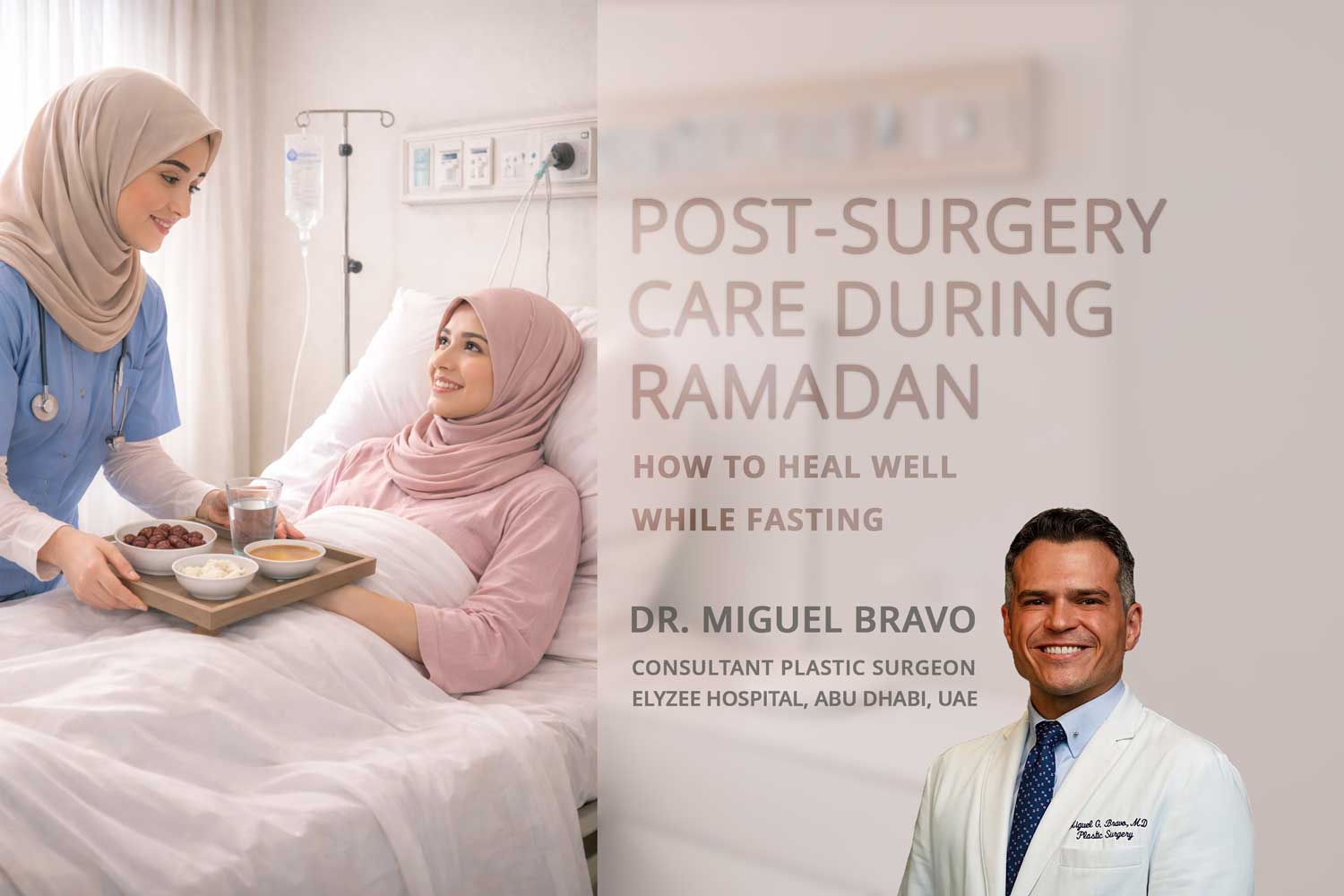


Ramadan is a time of reflection, discipline, and spiritual renewal. For patients who have recently undergone plastic surgery, it also brings practical questions — can I fast safely after my procedure? How do I make sure my body heals properly during long hours without food or water?
These are questions I hear every year from my patients here in Abu Dhabi, and they deserve thoughtful answers. The truth is that with some careful planning, you can absolutely honour your fast and support your recovery at the same time. Surgery puts significant demand on the body, and the healing process requires consistent nutrition, hydration, and rest. Ramadan changes the timing of all three, but it doesn’t have to compromise any of them.
Here are my key recommendations for navigating your post-operative recovery during the holy month.
Hydration Is Your Top Priority
This is the single most important thing to get right. Dehydration slows wound healing, thickens the blood, increases the risk of blood clots, and can make swelling significantly worse — none of which you want after surgery. In a normal recovery, I tell my patients to drink water throughout the day. During Ramadan, you need to be much more intentional about it.
Between Iftar and Suhoor, aim to drink at least two to three litres of water. Don’t try to drink it all at once — your body can only absorb so much at a time. Instead, keep a bottle nearby and sip consistently throughout the evening and early morning hours. Setting a small timer on your phone every thirty minutes can help.
Coconut water and electrolyte drinks can also help replenish minerals lost during the day, especially here in the UAE where the heat works against you. Watermelon, cucumber, and soups at Iftar are also excellent ways to add fluid without feeling overly full.
One thing I’d encourage you to limit is caffeine. I know the Ramadan coffee ritual is sacred for many people, but caffeine is a diuretic and will work against your hydration goals during recovery. If you must have your cup, keep it to one and make sure you compensate with extra water.
Fuel Your Recovery With Protein
Your body needs protein to repair tissue, produce collagen, rebuild muscle, and fight infection. After any surgical procedure, protein requirements go up significantly. During Ramadan, you have a much smaller eating window, which means every meal needs to count. This is not the time for empty calories.
At Iftar, after breaking your fast with dates and water in the traditional way, focus on a well- balanced meal rich in lean protein. Grilled chicken, fish, eggs, lean red meat, or legumes like lentils and chickpeas should form the centrepiece of your plate. Pair them with vegetables and healthy fats like olive oil, avocado, or nuts. Try to resist the temptation of heavy, fried foods — samosas, fried kibbeh, and creamy desserts are part of the Ramadan tradition, and there’s nothing wrong with enjoying them in moderation, but they shouldn’t replace the nutrient-dense foods your body is counting on to heal.
At Suhoor, think of it as your recovery meal. Eggs, Greek yoghurt, cottage cheese, or a whey protein shake are all excellent choices. Combine them with complex carbohydrates like oats, whole grain bread, or sweet potato for sustained energy through the fasting hours. Adding almonds or a tablespoon of nut butter gives you healthy fats that slow digestion and keep you satisfied longer.
A good rule of thumb during recovery: aim for at least 1.5 grams of protein per kilogram of body weight, spread across your two main meals and any snacks in between. If you find it difficult to eat enough whole food, a protein supplement can help bridge the gap.
Schedule Lymphatic Drainage Massage After Breaking the Fast
If you’ve had body contouring, liposuction, or a Brazilian Butt Lift, lymphatic drainage massage is an essential part of your recovery. It helps reduce swelling, prevents fluid buildup, improves circulation, and can genuinely speed up the healing process. During Ramadan, the timing of these sessions matters.
I recommend scheduling your lymphatic drainage appointments in the evening — ideally after Iftar, once you’ve had time to eat, rehydrate, and let your body settle. Your body responds much better to manual lymphatic drainage when it’s properly nourished and hydrated. A session on an empty stomach during fasting hours can leave you feeling lightheaded, nauseous, or faint, and the treatment may simply be less effective because your circulation is already under strain.
Most clinics and therapists in Abu Dhabi adjust their hours during Ramadan, so evening appointments are usually easy to arrange. If you’re unsure where to go, ask your surgeon’s team for a referral to a qualified therapist experienced in post-surgical lymphatic work.
Listen to Your Body — It’s Okay to Pause Fasting
This is important to say clearly: Islam provides exemptions from fasting for those who are unwell or recovering from illness. Surgery is a significant physical event, and the early post- operative period is a vulnerable time. If you are in the first days or weeks after your procedure, or if fasting is genuinely affecting your recovery, please speak with both your surgeon and your religious advisor. Your health comes first, and missed days can always be made up later.
Signs that your body may need more support than the fasting window allows include excessive fatigue that doesn’t improve with rest, persistent dizziness or lightheadedness, increased or worsening swelling, delayed wound healing, or any signs of infection. Don’t push through these warning signs out of a sense of obligation. Taking care of yourself is not a failure — it’s wisdom.
Manage Your Medications Carefully
Many post-operative medications — antibiotics, anti-inflammatories, pain relief, and blood thinners — need to be taken at specific intervals or with food to work properly and to protect your stomach. Fasting changes your routine, but it shouldn’t mean skipping doses or taking medications at the wrong time.
Before Ramadan begins, work with your surgeon to restructure your medication schedule around Iftar and Suhoor. In most cases, we can adjust the timing without compromising your care. For example, a twice-daily antibiotic can often be taken once at Iftar and once at Suhoor with no loss of effectiveness.
If you’re taking supplements to support healing — things like vitamin C, zinc, arnica, or bromelain for bruising and swelling — these should also be timed with your meals for proper absorption. Taking them on an empty stomach can cause nausea and reduces how well your body uses them.
Compression Garments and Rest
Ramadan often shifts daily routines in ways we don’t always anticipate. Late nights with family, Taraweeh prayers, social gatherings, and disrupted sleep patterns are all common. For patients in the post-operative period, rest remains absolutely essential, even when the rhythm of your days changes.
Continue wearing your compression garment exactly as directed — the fasting period doesn’t change this. Compression supports healing tissues, controls swelling, and helps shape your results. The reduced physical activity many people experience during fasting
hours can actually work in your favour. Use the quieter daytime hours for gentle rest, elevation if needed, and save social time for the evening when you’re nourished and feeling stronger.
If you’ve had lower body surgery — liposuction, a BBL, a tummy tuck, or thigh work — be mindful during Taraweeh prayers. Prolonged standing, deep bowing, and sitting on the floor can put strain on surgical sites. It’s perfectly acceptable to pray seated or to take breaks, and your body will thank you for it. Recovery is a valid reason to modify your physical practice, and most scholars support this view.
Keep Your Follow-Up Appointments
Finally, don’t let the changed Ramadan schedule become a reason to skip your post- operative check-ups. These visits allow me to monitor your healing, assess how your results are progressing, adjust recommendations if something needs attention, and catch any issues early before they become problems.
We fully accommodate Ramadan schedules at our clinic, so let us know what timing works best for you and we’ll make it happen. Your recovery doesn’t pause during Ramadan, and neither should your follow-up care.
Ramadan and recovery can absolutely go hand in hand with the right preparation. The key is planning ahead — stocking your kitchen with the right foods, scheduling your treatments wisely, adjusting your medications before the month begins, and giving yourself permission to rest.
If you have an upcoming procedure or are currently healing and have questions about managing your care during the holy month, don’t hesitate to reach out. We’re here to support you every step of the way.
Ramadan Kareem
Dr. Miguel Bravo, Board-Certified Plastic Surgeon | Elyzee Hospital, Abu Dhabi